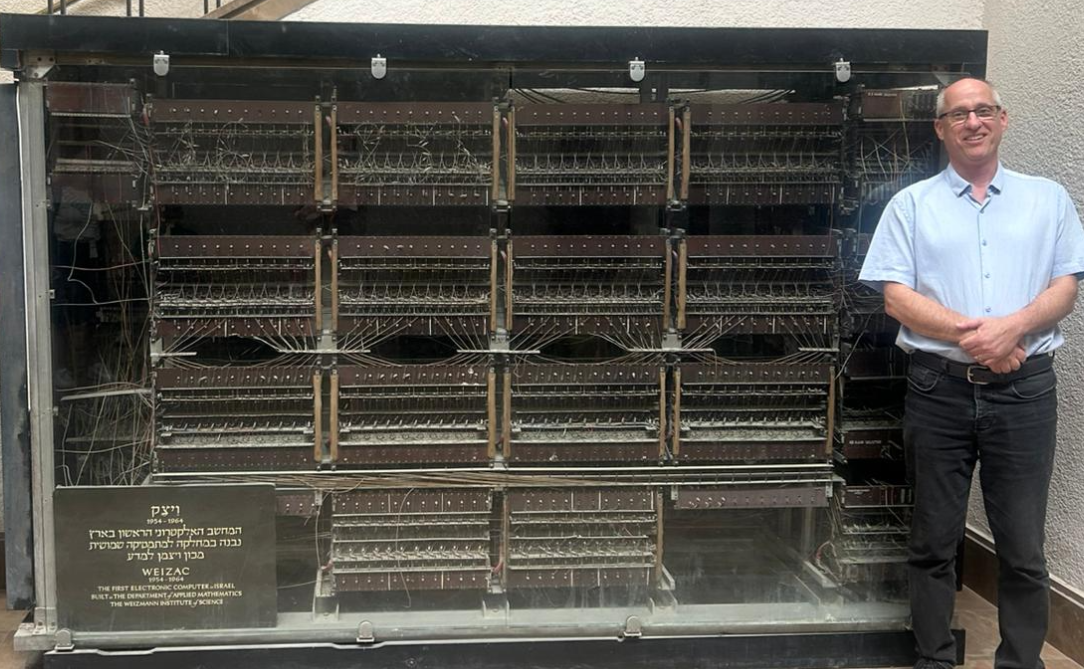
This site started with a visit. I went to the Weizmann Institute, found WEIZAC, and stood
next to the computer that helped begin Israel's computing story.
Seeing the machine in person made the history feel immediate. I decided to create this
site and simulator so others could meet WEIZAC too, read its story, and try the ideas
behind the machine for themselves.
The WEIZAC (Weizmann Automatic Computer) was Israel's first computer,
completed in 1955 at the Weizmann Institute of Science in Rehovot. Based on the
IAS architecture designed by John von Neumann at Princeton, it was built largely
from schematics, without access to many standard parts, by a small team of
dedicated scientists and engineers in the basement of the Ziskind Building.
Key facts: 40-bit word length, 21 instructions,
1024 words of magnetic drum memory (later expanded to 4096, then 12,288 words).
It operated from 1955 until its retirement in 1963, performing groundbreaking
calculations in tidal prediction, quantum mechanics, and numerical analysis.
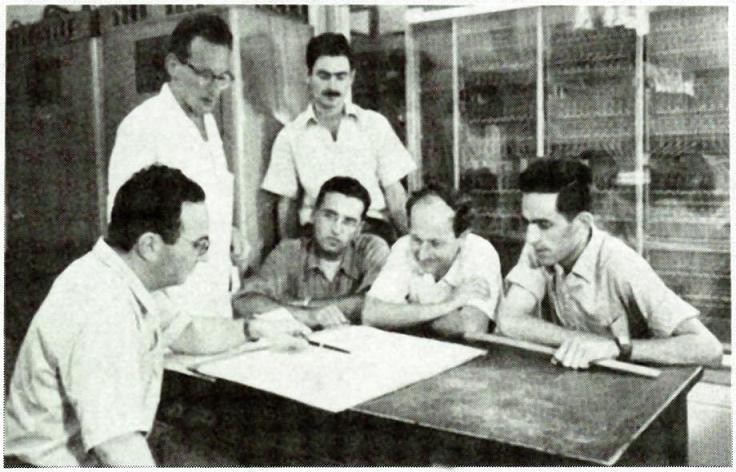
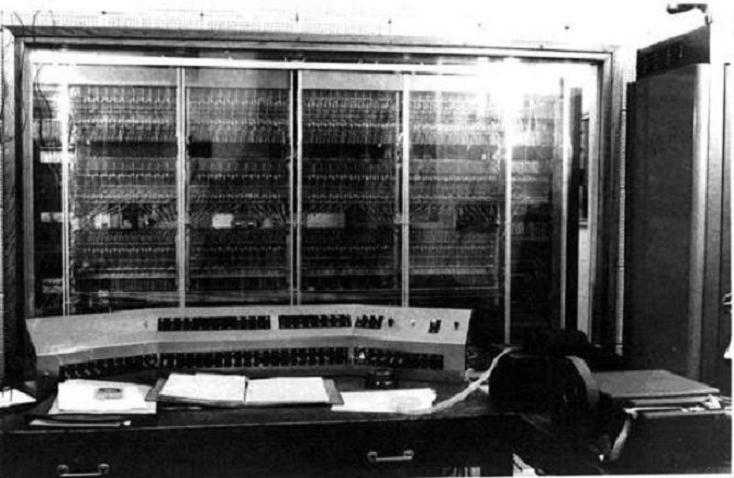
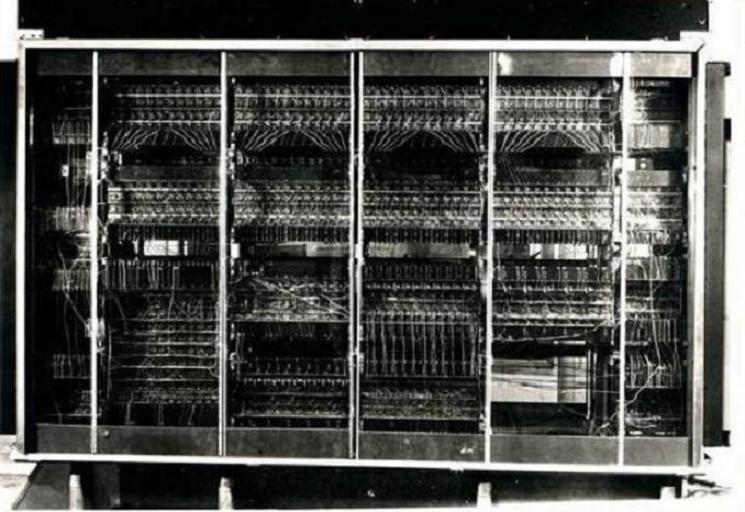
WEIZAC engineering group with the completed machine (Weizmann archive)WEIZAC operator console (Weizmann archive)Central processing unit of WEIZAC (Weizmann archive)
Historical photos in this section are from the Weizmann Institute WEIZAC archive.
The Birth of a Computer in a Nation Being Born
WEIZAC, the Weizmann Automatic Computer, was the first computer in Israel and one of the
first large-scale stored-program electronic computers in the world.12
It was built at the
Weizmann Institute of Science16
in Rehovot during 1954 and 1955, at a moment when the country was still fighting for the
basics of statehood: housing, roads, food production, immigrant absorption, industry, and
scientific institutions.
The decision was not practical in the narrow sense. Israel had no computer industry, no pool
of trained digital engineers, no established programming profession, and no easy way to buy
the parts for a machine of this class. That is exactly why WEIZAC matters. It was not only a
machine for calculations. It was a deliberate attempt to create national scientific capacity
before the infrastructure for that capacity existed.3
For eight years, from late 1955 until December 29, 1963, WEIZAC served physicists,
mathematicians, geophysicists, chemists, crystallographers, defense researchers, and young
programmers. Until 1961 it was the only computer in Israel.1
Princeton, 1945: Where It All Started
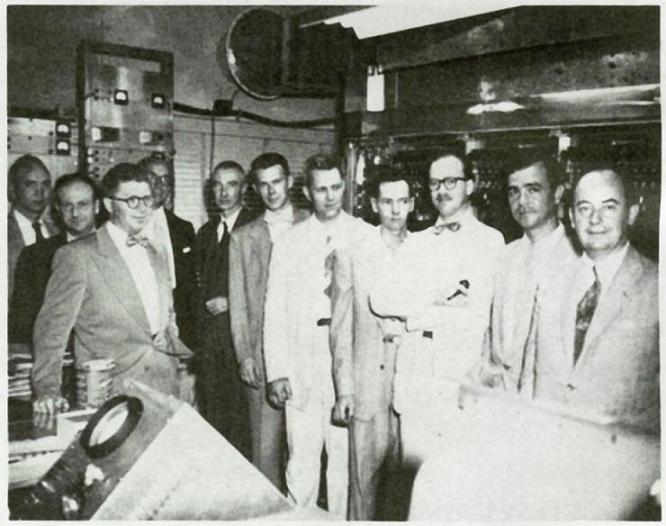
WEIZAC project leaders and engineers at the Institute for Advanced Study (photo1, Weizmann archive)
The technical roots of WEIZAC ran through Princeton. In the mid-1940s,
the Institute for Advanced Study17
brought together figures such as Albert Einstein, John von Neumann, Herman Goldstine, Julian
Bigelow, and a younger generation of engineers. Von Neumann's group was building the IAS
computer, a binary stored-program machine that used 40-bit words, two 20-bit instructions per
word, and a shared memory for data and instructions.14
Working in that environment was Chaim L. Pekeris, a Lithuanian-born Jewish
physicist and applied mathematician. Pekeris understood earlier than most scientists that
electronic computing could change the scale of scientific work. His specialty was turning
difficult physical problems into numerical methods that a machine could actually execute.
In 1945, the Weizmann Institute asked Pekeris to establish a Department of Applied
Mathematics in Rehovot. He accepted on one condition: the Institute must build a computer
similar to the IAS machine. His immediate target was Laplace's tidal equations for the
Earth's oceans, a problem with too many coupled numerical steps to be handled realistically
by hand calculation.14
From ENIAC to WEIZAC: The First Electronic Computers
WEIZAC belonged to the first generation of electronic digital computers. The list below gives
the machines that formed the path from ENIAC to WEIZAC, with a one-line view of where each
was built, what it could do, and why it is remembered.14
Year
Computer
Built at
One-line significance
1945
ENIAC
University of Pennsylvania, USA
Electronic general-purpose decimal computer for ballistic and scientific calculations; programmed by cables and switches, and famous for its women programmers.
1948
Manchester Baby
University of Manchester, UK
Experimental stored-program computer with Williams tube memory; proved that a program could live in electronic memory.
1949
Manchester Mark 1
University of Manchester, UK
Practical successor to the Baby with index registers and drum storage; its design fed into the Ferranti Mark 1.
1949
EDSAC
University of Cambridge, UK
Stored-program computer built to serve university researchers; ran early programs for squares and primes and helped create a programming culture.
1949
BINAC
Eckert-Mauchly Computer Corporation for Northrop, USA
Early binary stored-program machine for aircraft guidance research; built by the ENIAC creators' new company.
1949
CSIRAC
CSIR Radiophysics Laboratory, Sydney, Australia
Australian stored-program computer for scientific work; one of the oldest surviving first-generation computers and an early machine used to play music.
1950
SEAC
U.S. National Bureau of Standards, Washington, DC
Stored-program computer built as an interim standards machine; became a productive scientific and government computing workhorse.
1950
SWAC
National Bureau of Standards at UCLA, USA
Fast scientific computer for numerical research; especially remembered for number theory calculations.
1951
EDVAC
Moore School and U.S. Army Ballistics Research Laboratory, USA
Binary stored-program successor concept to ENIAC; the EDVAC report helped spread the stored-program architecture.
1951
UNIVAC I
Eckert-Mauchly and Remington Rand, USA
Commercial stored-program computer for data processing; became famous after predicting the 1952 U.S. presidential election.
1951
LEO I
J. Lyons & Co., UK
Business computer based on EDSAC ideas; ran routine office jobs for a tea shop and food company.
1952
IAS Machine
Institute for Advanced Study, Princeton, USA
40-bit stored-program research computer; its widely shared design shaped an international family of machines.
1952
ORDVAC
University of Illinois for the U.S. Army, USA
IAS-style machine for Aberdeen Proving Ground; linked university computer building with military scientific computing.
1952
ILLIAC I
University of Illinois, USA
University-built IAS derivative for research; became one of the early centers of academic computing.
1952
MANIAC I
Los Alamos Scientific Laboratory, USA
IAS derivative for physics and weapons calculations; used in early Monte Carlo and computational physics work.
1952
IBM 701
IBM, USA
IBM's first large scientific electronic computer; brought IAS-style ideas into commercial scientific computing.
1953
AVIDAC
Argonne National Laboratory, USA
IAS-family computer for scientific research; supported nuclear and laboratory calculations.
1953
ORACLE
Oak Ridge National Laboratory, USA
IAS derivative for nuclear and scientific work; became one of the most capable U.S. laboratory computers of its time.
1953
BESK
Swedish Board for Computing Machinery, Stockholm
Fast European stored-program computer; for a time it was regarded as one of the fastest computers in the world.
1954
JOHNNIAC
RAND Corporation, USA
IAS derivative named for John von Neumann; unusually long-lived and used for research into the 1960s.
1955
WEIZAC
Weizmann Institute of Science, Rehovot, Israel
IAS-based 40-bit computer for Israeli science; first computer in Israel and the country's only computer until 1961.
The Advisory Committee: Einstein Says No, Von Neumann Says Yes
In July 1947, an advisory committee for the Weizmann Institute's Applied Mathematics
Department discussed Pekeris' proposal. Its members included Albert Einstein and John von
Neumann. Einstein was skeptical. Electronic computers were experimental, expensive, and far
from proven. For a young country short of material resources, the plan sounded almost
unreasonable.3
Von Neumann took the opposite view. When someone asked, "What will that tiny country do with
an electric computer?", he replied:
"Don't worry about that problem. If nobody else uses the computer, Pekeris will use it full time!"
John von Neumann, 19474
Einstein was eventually persuaded. Chaim Weizmann, head of the Institute and Israel's first
president, assigned US$50,000 to the project, about one fifth of the
Institute's budget.5 It was an astonishing bet: a fifth of a
scientific institute's resources for a machine that almost nobody in the country yet knew how
to build, program, repair, or even fully imagine using.
Gerald and Thelma Estrin: Schematics But No Parts
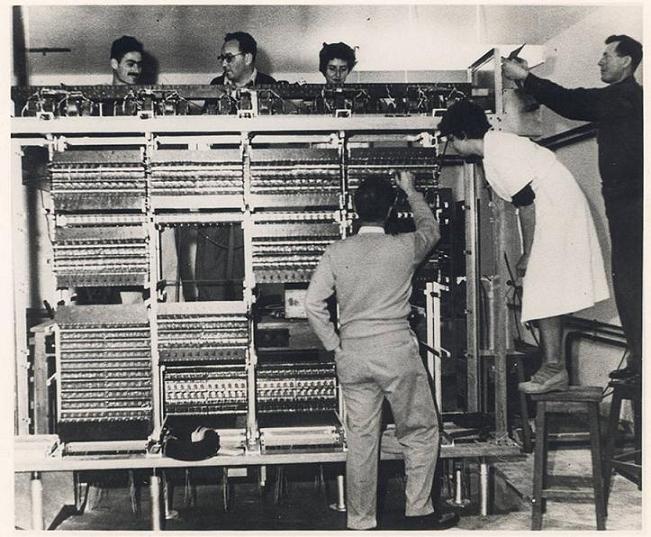
Constructing and checking WEIZAC (photoa, Weizmann archive)
In 1952, Gerald Estrin18,
a research engineer from the IAS computer project, was chosen to lead construction in
Israel. He came with his wife,
Thelma Estrin19,
an electrical engineer who also worked on the project. They arrived by ship, carrying the
design knowledge of Princeton but not the parts needed to turn that knowledge into hardware.
The Estrins brought schematics. The rest had to be found, fabricated,
adapted, or invented locally. Gerald later captured the strange confidence required by the
project:
"As I look back now, if we had systematically laid out a detailed plan of execution we would probably have aborted the project."
Gerald Estrin1
Estrin discovered that many Israeli scientists, except Pekeris, thought the plan was
ridiculous. He was placed in three rooms in the basement of the Ziskind Building and told, in
effect, to turn drawings into a national computing laboratory.3
Building It: Improvisation and Determination
WEIZAC was built in conditions very different from Princeton, Cambridge, Manchester, or IBM.
The team had to create both the computer and the local craft needed to make a computer
possible. The vacuum tubes, chassis, memory, power systems, testing tools, punched tape
equipment, wiring, and documentation all demanded a mix of formal engineering and practical
improvisation.
Micha Kedem, an Israeli electrical engineer, joined Pekeris in roaming the
streets of Tel Aviv searching for parts to build a tube tester. When precision machinery was
needed, the team turned to a shop that normally made fans and bicycle parts, owned by recent
immigrants from Bulgaria.3
Zvi Riesel, who had run the IDF radar workshop, joined after seeing a
newspaper advertisement looking for people to build an electronic computer. Many applicants
had lost education records during the Holocaust or immigration. In Israel's small technical
community, reputation and demonstrated skill often mattered more than paperwork.3
Ephraim Frei brought physics and electronics expertise. Phillip
Rabinowitz, a Whirlwind veteran from MIT, taught programming courses at Weizmann.
Hans Jarosch, a new immigrant and aeronautical engineer, wrote application
programs. Together with Kedem, Riesel, Thelma Estrin, and others, they turned WEIZAC into a
working institution, not merely a finished device.310
First Calculation: October 1955
Central processing unit of WEIZAC (w2, Weizmann archive)
Construction began in earnest in 1954 and continued through 1955. As the machine neared
completion, Gerald and Thelma Estrin returned to the United States. Shortly afterward, in
October 1955, WEIZAC performed its first calculation.7
By early 1958 it was in full operation, with a growing user community and a backlog of
scientific work waiting for time on the machine.3
Technical Specifications
WEIZAC followed the IAS style but, like almost every first-generation computer, it was a
one-of-a-kind machine. Even other IAS-family computers could not simply exchange programs
with it.1
Feature
Specification
Architecture
IAS-derived stored-program electronic computer
Word size
40 bits
Instruction format
20 bits, with an 8-bit opcode and 12-bit address
Instructions per word
2
Number representation
Binary, two's complement
Operation mode
Asynchronous, with no central clock
Registers
Accumulator (AC) and Multiplier/Quotient (MQ)
Primary input
Punched paper tape
Later I/O
Magnetic tape, added in 1958
Initial memory
1,024 words on a magnetic drum
Core memory upgrade
4,096 words of magnetic-core memory
Final memory, 1961
12,288 words, arranged as three 4,096-word modules
Scientific Breakthroughs
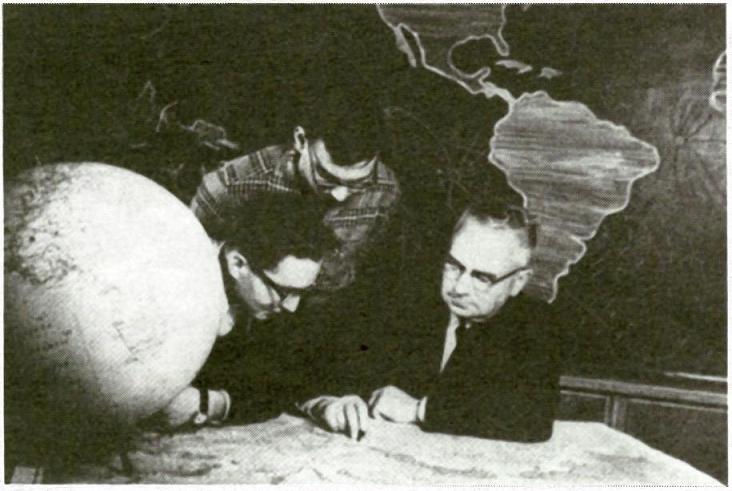
Chaim Pekeris and colleagues discussing an ocean tides model (photo11, Weizmann archive)
WEIZAC justified Pekeris' insistence almost immediately. Its value was not that it made
arithmetic faster in the abstract. It made certain scientific questions newly reachable.
Ocean tides: WEIZAC was used to solve Laplace's tidal equations on a
global scale. The calculations helped identify an amphidromic point in the South Atlantic,
a point around which tides rotate and at which the tide level does not change.1
Quantum mechanics: Yigal Accad translated Pekeris' equations for a
two-electron atom into machine code. WEIZAC calculated eigenvalues for the system, and the
results were later checked against experimental work at Brookhaven National Laboratory.8
Geophysics and seismology: The machine supported earthquake and earth
science calculations that required repeated numerical solution of physical models.1
Chemistry and materials: WEIZAC was used in atomic spectroscopy and X-ray
crystallography, fields where mathematical models had to be matched to experimental data.1
Numerical analysis: It supported random walk methods, approximation work,
and the training of Israeli scientists in machine-based computation.1
Israel's Only Computer
Until 1961, WEIZAC was the only computer in the State of Israel. That fact
turned it into a national resource. Users from other institutions competed for computing
time, and frustration over the waiting list became one of the clearest proofs that Israel
needed more computers, more programmers, and more digital engineers.16
End of an Era
WEIZAC operated until December 29, 1963. It was replaced by a commercially
built CDC 1604A20,
while the Institute's staff began work on a locally designed successor called
GOLEM. The transition marked the end of the heroic one-machine era and the
beginning of a broader Israeli computing ecosystem.1
Legacy
"Remarkable changes in Israel were evident. New roads, new buildings, new people, new problems.
Before the start of the WEIZAC project there were no digital electronic computers in Israel.
No electronic digital engineers. No programmers and no support personnel. The WEIZAC people
succeeded in creating the technological know-how necessary for Israel to play a strong role
in the information revolution."
Gerald Estrin, 19633
In 2006, IEEE recognized WEIZAC as a Milestone in the history of electrical engineering and
computing. The honor was not simply for building a machine. It recognized a cultural and
technical leap: a group of scientists and engineers built a first-generation computer in a
young country, used it for serious science, and created the skills that later fed Israel's
computing and technology industries.69
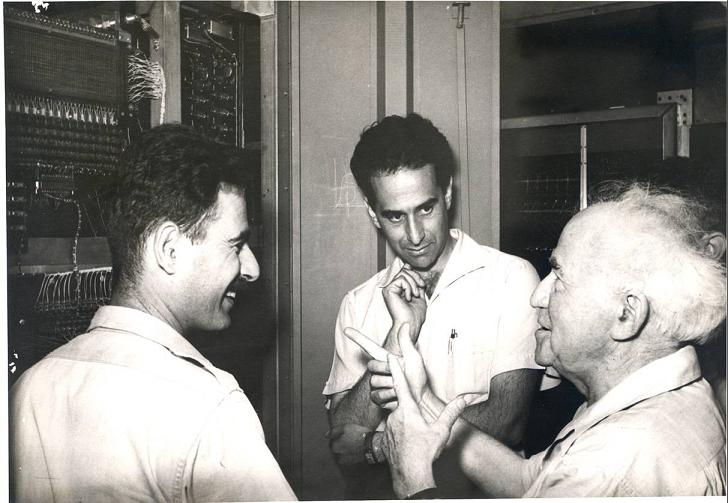
Micha Kedem, Amos De-Shalit, and David Ben-Gurion (photo12, Weizmann archive)
WEIZAC Timeline
1945
Pekeris Sets the Condition
The Weizmann Institute asks Chaim Pekeris to establish Applied Mathematics. He asks for a computer like the IAS machine.
1947
Advisory Committee
Einstein questions the plan, von Neumann supports it, and Chaim Weizmann allocates $50,000, about 20% of the Institute's budget.
1952
The Estrins Arrive
Gerald and Thelma Estrin arrive from the IAS project with schematics and begin turning the plan into hardware.
1954
Construction Begins
The WEIZAC team builds the computer in Rehovot, improvising parts, test equipment, and procedures as they go.
1955
First Calculation
WEIZAC performs its first computation in October. Israel's first computer is alive.
1958
Full Operation
WEIZAC reaches full operational capacity. Magnetic tape I/O is added and the machine becomes a national scientific resource.
1961
Memory Expansion
Additional 4,096-word core memory modules expand total memory to 12,288 words.
1963
Retirement
WEIZAC operates its last day on December 29 and is replaced by a CDC 1604A.
2006
IEEE Milestone
IEEE recognizes WEIZAC as a Milestone in Electrical Engineering and Computing. The builders receive the WEIZAC Medal.
The People Who Built WEIZAC
CLP
Chaim L. Pekeris
Visionary & Scientific Driver
Lithuanian-born physicist who made a computer his condition for joining Weizmann. His tidal and quantum calculations gave WEIZAC its first great missions.
CW
Chaim Weizmann
Institutional Sponsor
Head of the Weizmann Institute and Israel's first president. He committed $50,000, about a fifth of the Institute budget, to the computer project.
JvN
John von Neumann
IAS Architecture Champion
Supported the project when others doubted it and provided the architectural lineage that shaped WEIZAC's 40-bit stored-program design.
AE
Albert Einstein
Advisory Committee Member
Initially skeptical of building such an expensive experimental machine in a young country, then accepted the plan after von Neumann's support.
GE
Gerald Estrin
Construction Lead
Princeton engineer from the IAS project who led WEIZAC's physical construction and later documented the WEIZAC years.
TE
Thelma Estrin
Electrical Engineer
Worked with Gerald Estrin on the project and later became a pioneer in biomedical engineering and one of the notable women in early computing.
EF
Ephraim Frei
Physicist and Engineer
Princeton-linked Israeli physicist who joined the project and helped bridge high-level scientific aims with practical electronics work.
MK
Micha Kedem
Electrical Engineer
Israeli engineer who searched Tel Aviv for parts, helped build test equipment, and later became part of Israel's computing industry.
ZR
Zvi Riesel
Electronics Technician
Former IDF radar workshop chief who joined after seeing a newspaper ad and brought hands-on electronics expertise to the machine.
PR
Phillip Rabinowitz
Programming Instructor
Whirlwind veteran from MIT who taught programming at Weizmann and helped train Israel's first generation of computer users.
HJ
Hans Jarosch
Application Programmer
Aeronautical engineer and new immigrant who wrote application programs after service in the Israeli Air Force.
YA
Yigal Accad
Scientific Programmer
Translated Pekeris' two-electron atom equations into WEIZAC machine code, producing landmark quantum calculations.
Corry, Leo; Leviathan, Raya (2023). Chaim L. Pekeris and the Art of Applying Mathematics with WEIZAC, 1955-1963. Springer Nature. ISBN 978-3-031-27125-0
התמונות ההיסטוריות בעמוד הזה מגיעות מארכיון ה-WEIZAC של מכון ויצמן.
לידת מחשב בתוך לידת מדינה
ה-WEIZAC, ראשי תיבות של Weizmann Automatic Computer, היה המחשב הראשון בישראל.
הוא נבנה במכון ויצמן למדע16
ברחובות בשנים 1954 ו-1955, בתקופה שבה המדינה עוד ניסתה לסדר את הדברים הכי בסיסיים:
בתים, כבישים, מזון, קליטת עלייה, תעשייה, צבא, אוניברסיטאות ומוסדות מחקר.
בגלל זה הסיפור שלו כל כך יפה בעיניי. לא מדובר במדינה עשירה שקנתה מחשב מוכן.
כמעט לא היתה כאן תעשיית אלקטרוניקה, לא היו הרבה מהנדסים עם ניסיון במחשבים דיגיטליים,
ולא היתה קהילה של מתכנתים. ובכל זאת, קבוצה קטנה החליטה שמדע רציני צריך כלי רציני,
גם אם צריך לבנות אותו כמעט מאפס.
מ-1955 ועד 29 בדצמבר 1963 ה-WEIZAC שירת מדענים, מתמטיקאים, פיזיקאים, גיאופיזיקאים,
כימאים, אנשי ביטחון ומתכנתים צעירים. עד 1961 הוא היה המחשב היחיד בישראל.
פרינסטון, 1945: איפה הכל התחיל
ראשי פרויקט WEIZAC ומהנדסים במכון למחקר מתקדם בפרינסטון (ארכיון ויצמן)
השורשים של WEIZAC מתחילים בפרינסטון. באמצע שנות ה-40, במכון למחקר מתקדם,
עבדו אנשים כמו אלברט איינשטיין וג'ון פון נוימן. פון נוימן הוביל שם את בניית
מחשב ה-IAS, אחד המחשבים החשובים הראשונים עם תוכנית שמורה בזיכרון.
הרעיון היה פשוט ומבריק: הזיכרון מחזיק גם נתונים וגם הוראות. המחשב קורא הוראה,
מבצע אותה, עובר להוראה הבאה, וכך אפשר לכתוב תוכנית אמיתית במקום לחבר מחדש כבלים
בכל פעם. במחשב ה-IAS היו מילים של 40 סיביות, ובכל מילה נכנסו שתי הוראות של 20 סיביות.
ליד פון נוימן עבד חיים ל. פקריס, פיזיקאי ומתמטיקאי שימושי יליד ליטא.
פקריס לא ראה במחשב צעצוע הנדסי. הוא ראה בו מכשיר מדעי חדש. ב-1945 מכון ויצמן ביקש
ממנו להגיע לרחובות ולהקים מחלקה למתמטיקה שימושית. הוא הסכים, אבל עם תנאי אחד:
המכון חייב לבנות מחשב דומה ל-IAS. החלום שלו היה לפתור את משוואות הגאות והשפל של לפלס
עבור האוקיינוסים, בעיה גדולה מדי לחישוב ידני.
מ-ENIAC עד WEIZAC: המחשבים הראשונים
כדי להבין איפה WEIZAC נמצא בהיסטוריה, כדאי לשים אותו על ציר הזמן של המחשבים
האלקטרוניים הראשונים. זה לא היה מחשב מאוחר או שולי. הוא היה חלק מהגל הראשון ממש.
שנה
מחשב
איפה נבנה
מה מיוחד בו
1945
ENIAC
אוניברסיטת פנסילבניה, ארצות הברית
מחשב אלקטרוני כללי לחישובים בליסטיים ומדעיים. תכנתו אותו בכבלים ומתגים.
1948
Manchester Baby
אוניברסיטת מנצ'סטר, בריטניה
ניסוי קטן שהוכיח שתוכנית יכולה להיות שמורה בזיכרון אלקטרוני.
1949
Manchester Mark 1
אוניברסיטת מנצ'סטר, בריטניה
המשך מעשי יותר ל-Baby, עם רעיונות שהשפיעו על Ferranti Mark 1.
1949
EDSAC
אוניברסיטת קיימברידג', בריטניה
מחשב שירות אקדמי מוקדם. מדענים באמת השתמשו בו למחקר יומיומי.
1949
BINAC
חברת Eckert-Mauchly עבור Northrop, ארצות הברית
מחשב בינארי מוקדם של יוצרי ENIAC, שנבנה למחקר הנחיית מטוסים.
1949
CSIRAC
מעבדת CSIR בסידני, אוסטרליה
מחשב מדעי אוסטרלי, וגם אחד המחשבים הראשונים שניגנו מוזיקה.
1950
SEAC
הלשכה הלאומית לתקנים, וושינגטון
מחשב ממשלתי ומדעי שהפך לכלי עבודה יעיל ולא רק לניסוי.
1950
SWAC
UCLA והלשכה הלאומית לתקנים, ארצות הברית
מחשב מהיר לזמנו, זכור במיוחד מחישובים בתורת המספרים.
1951
EDVAC
Moore School וצבא ארצות הברית
מחשב בינארי עם תוכנית שמורה. הדוח עליו עזר להפיץ את הארכיטקטורה החדשה.
1951
UNIVAC I
Eckert-Mauchly ו-Remington Rand, ארצות הברית
מחשב מסחרי מוקדם לעיבוד נתונים. התפרסם כשחזה את הבחירות בארצות הברית ב-1952.
1951
LEO I
חברת J. Lyons & Co., בריטניה
מחשב עסקי מוקדם שניהל עבודות משרדיות עבור חברת מזון ותה.
1952
IAS Machine
המכון למחקר מתקדם, פרינסטון
מחשב מחקר של 40 סיביות. השרטוטים והרעיונות שלו השפיעו על משפחה שלמה של מחשבים.
1952
ORDVAC
אוניברסיטת אילינוי עבור צבא ארצות הברית
מחשב בסגנון IAS שחיבר בין מחקר אוניברסיטאי לצרכים צבאיים.
1952
ILLIAC I
אוניברסיטת אילינוי, ארצות הברית
מחשב אוניברסיטאי חשוב שהפך למרכז מוקדם של חישוב אקדמי.
1952
MANIAC I
לוס אלמוס, ארצות הברית
מחשב למחקר פיזיקלי וחישובים גרעיניים, כולל עבודות Monte Carlo מוקדמות.
1952
IBM 701
IBM, ארצות הברית
המחשב האלקטרוני המדעי הגדול הראשון של IBM.
1953
AVIDAC
המעבדה הלאומית ארגון, ארצות הברית
מחשב ממשפחת IAS לחישובים מדעיים ומחקר גרעיני.
1953
ORACLE
המעבדה הלאומית Oak Ridge, ארצות הברית
מחשב חזק לזמנו ששימש למחקר מדעי וגרעיני.
1953
BESK
סטוקהולם, שבדיה
מחשב אירופי מהיר מאוד לזמנו, שנחשב תקופה מסוימת לאחד המהירים בעולם.
1954
JOHNNIAC
RAND Corporation, ארצות הברית
מחשב ממשפחת IAS על שם פון נוימן, שפעל שנים רבות יחסית.
1955
WEIZAC
מכון ויצמן למדע, רחובות
המחשב הראשון בישראל, מבוסס IAS, ושימש את המדע הישראלי כמחשב היחיד במדינה עד 1961.
הוועדה המייעצת: איינשטיין מהסס, פון נוימן דוחף קדימה
ביולי 1947 התכנסה ועדה מייעצת כדי לדון בתוכנית של פקריס. היו שם אנשים בסדר גודל
שקשה לדמיין, כולל אלברט איינשטיין וג'ון פון נוימן. איינשטיין לא קפץ על הרעיון.
מחשבים היו יקרים, ניסיוניים ולא בטוח שימושיים. למדינה צעירה ודלה במשאבים זה נשמע
כמעט מותרות.
פון נוימן חשב אחרת. כששאלו מה כבר תעשה מדינה קטנה עם מחשב חשמלי, הוא ענה:
"אל תדאגו לבעיה הזו. אם אף אחד אחר לא ישתמש במחשב, פקריס ישתמש בו במשרה מלאה!"
ג'ון פון נוימן, 1947
בסוף איינשטיין השתכנע. חיים ויצמן, ראש המכון ונשיאה הראשון של מדינת ישראל,
הקצה לפרויקט 50,000 דולר, בערך חמישית מתקציב המכון. זה הימור ענק:
לא על מחשב מוכן, אלא על היכולת של אנשים בארץ לבנות ידע מאפס.
ג'רלד ותלמה אסטרין: שרטוטים בלי חלקים
בניית WEIZAC ובדיקת המחשב (ארכיון ויצמן)
ב-1952 נבחר ג'רלד אסטרין, מהנדס שעבד בפרויקט ה-IAS בפרינסטון,
להוביל את בניית WEIZAC בישראל. הוא הגיע עם אשתו תלמה אסטרין,
גם היא מהנדסת חשמל ואחת הנשים החשובות בראשית עולם המחשוב.
הם הביאו איתם את השרטוטים ואת ההבנה של פרינסטון, אבל לא הביאו ארגזים של חלקים.
את החלקים היה צריך למצוא, להזמין, לאלתר, לבנות או להחליף במשהו מקומי. אסטרין קיבל
כמה חדרים במרתף בניין זיסקינד, ושם התחיל להפוך רעיון למכונה.
"כשאני מסתכל אחורה, אם היינו מתכננים באופן שיטתי תוכנית ביצוע מפורטת, כנראה היינו מבטלים את הפרויקט."
ג'רלד אסטרין
המשפט הזה מרגיש מאוד אמיתי. לפעמים פרויקט מצליח דווקא כי מתחילים לזוז לפני שמבינים
עד הסוף כמה הוא קשה.
הבנייה: הרבה אלתור, הרבה חוצפה טובה
היום אנחנו רגילים להזמין רכיבים, לפתוח תיעוד, להוריד SDK ולהתחיל לעבוד. ב-WEIZAC
זה היה עולם אחר. הצוות היה צריך לבנות גם את המחשב וגם את היכולת המקומית לבנות מחשב.
שפופרות, ספקי כוח, חיווט, בדיקות, זיכרון, סרט נייר, כלי מדידה, הכל היה פרויקט בפני עצמו.
מיכה קדם הסתובב עם פקריס בתל אביב בחיפוש אחרי חלקים. כשצריך היה
ייצור מדויק, הם נעזרו גם בבית מלאכה שעשה מאווררים וחלקי אופניים. צבי ריזל,
שהיה אחראי על סדנת המכ"ם של צה"ל, הגיע אחרי שראה מודעה בעיתון. פיליפ רבינוביץ',
שעבד קודם בפרויקט Whirlwind ב-MIT, לימד את קורסי התכנות הראשונים. הנס ירוש
כתב תוכניות יישום. אפרים פריי הביא ידע בפיזיקה ובאלקטרוניקה.
זה לא היה רק צוות שבונה חומרה. זו היתה תחילת קהילה מקצועית. אנשים למדו איך לחשוב
במונחים של מילים בינאריות, כתובות, הוראות, זיכרון, באגים וזמן מחשב. במובן הזה,
WEIZAC לא רק חישב. הוא לימד את ישראל איך לעבוד עם מחשבים.
החישוב הראשון: אוקטובר 1955
יחידת העיבוד המרכזית של WEIZAC (ארכיון ויצמן)
הבנייה הרצינית התקדמה בשנים 1954 ו-1955. באוקטובר 1955 WEIZAC ביצע את החישוב הראשון
שלו. זה רגע קטן על הנייר, אבל ענק בהיסטוריה המקומית: בפעם הראשונה מחשב אלקטרוני בישראל
קרא הוראות, ביצע אותן והחזיר תוצאה.
עד תחילת 1958 המחשב כבר היה בפעולה מלאה. נוספו סרטים מגנטיים, גדל מספר המשתמשים,
והתחיל להיווצר תור אמיתי של חוקרים שרצו זמן מחשב.
מפרט טכני
WEIZAC היה מבוסס על רעיונות ה-IAS, אבל כמו רוב המחשבים של הדור הראשון הוא היה מכונה
ייחודית. גם מחשבים מאותה משפחה לא היו בהכרח תואמים אחד לשני ברמת התוכניות.
תכונה
מפרט
ארכיטקטורה
מחשב אלקטרוני עם תוכנית שמורה, בהשראת IAS
גודל מילה
40 סיביות
פורמט הוראה
20 סיביות, 8 סיביות קוד פעולה ו-12 סיביות כתובת
הוראות למילה
2
ייצוג מספרים
בינארי, משלים לשתיים
מצב פעולה
א-סינכרוני, ללא שעון מרכזי
אוגרים
צובר (AC), מכפל/מנה (MQ)
אמצעי קלט ראשי
סרט נייר מנוקב
קלט ופלט מאוחרים יותר
סרט מגנטי, נוסף ב-1958
זיכרון ראשוני
1,024 מילים על תוף מגנטי
שדרוג זיכרון
4,096 מילים של זיכרון ליבה מגנטית
זיכרון סופי, 1961
12,288 מילים, בשלושה מודולים של 4,096 מילים
פריצות דרך מדעיות
חיים פקריס ועמיתים דנים במודל גאות ושפל (ארכיון ויצמן)
ה-WEIZAC הוכיח מהר מאוד שהוא לא גימיק. הוא איפשר למדענים לשאול שאלות שבפועל אי אפשר
היה לפתור ביד. זה ההבדל בין מחשבון גדול לבין שינוי אמיתי בדרך שעושים מדע.
גאות ושפל: חישובי משוואות לפלס עזרו לזהות נקודה אמפידרומית בדרום האוקיינוס האטלנטי, נקודה שסביבה הגאות מסתובבת ובה גובה המים כמעט לא משתנה.
מכניקת הקוונטים: יגאל עקד תכנת את הפיתוח המתמטי של פקריס למערכת של אטום עם שני אלקטרונים. התוצאות נבדקו בהמשך מול ניסויים במעבדת ברוקהייבן.
גיאופיזיקה ורעידות אדמה: המחשב שימש לחישובים חוזרים של מודלים פיזיקליים, בדיוק סוג העבודה שמחשב עושה טוב יותר מבני אדם.
כימיה וחומרים: WEIZAC שימש גם בספקטרוסקופיה אטומית ובקריסטלוגרפיית רנטגן, שבהן צריך להתאים מודלים מתמטיים למדידות.
אנליזה נומרית: המחשב שימש לשיטות קירוב, random walk, ולימוד מעשי של חישוב מדעי בישראל.
המחשב היחיד בישראל
עד 1961, ה-WEIZAC היה המחשב היחיד בכל מדינת ישראל.
זה אומר שכל מי שהיה צריך חישוב רציני רצה להגיע אליו. הוא היה תפוס כל הזמן, והלחץ
על זמן מחשב הפך לטיעון הכי משכנע לכך שישראל צריכה עוד מחשבים ועוד אנשים שיודעים
לעבוד איתם.
בעיניי זה אחד החלקים הכי מעניינים בסיפור. ה-WEIZAC לא רק פתר בעיות קיימות.
הוא יצר ביקוש. אנשים ראו מה אפשר לעשות עם מחשב, ואז כבר אי אפשר היה לחזור אחורה.
סוף התקופה ותחילת ההמשך
WEIZAC פעל עד 29 בדצמבר 1963. אחריו נכנס לשימוש מחשב CDC 1604A מסחרי,
ובמכון ויצמן התחילו לעבוד גם על יורש מקומי בשם GOLEM.
זה היה מעבר חשוב. במקום מחשב יחיד, נדיר, שנבנה כמעט כמו משימת חלוץ, התחילה להיווצר
סביבת מחשוב רחבה יותר. יותר מחשבים, יותר משתמשים, יותר תוכניות, יותר ידע.
מורשת
"שינויים מרשימים בישראל היו ניכרים. לפני תחילת פרויקט ה-WEIZAC לא היו בישראל
מחשבים אלקטרוניים דיגיטליים. לא היו מהנדסי אלקטרוניקה דיגיטלית. לא היו מתכנתים
ולא צוות תמיכה. אנשי ה-WEIZAC הצליחו ליצור את הידע הטכנולוגי הדרוש לישראל כדי
למלא תפקיד חזק במהפכת המידע."
ג'רלד אסטרין, 1963
ב-5 בדצמבר 2006, ה-IEEE הכיר ב-WEIZAC כאבן דרך בהיסטוריה של ההנדסה החשמלית
והמחשוב. הצוות שבנה אותו קיבל את "מדליית ה-WEIZAC".
בעיניי, המורשת שלו היא לא רק שהוא היה ראשון. הרבה דברים הם "ראשונים" ונשכחים.
WEIZAC חשוב כי הוא הראה שאפשר לבנות כאן יכולת אמיתית, עם ידע מקומי, עם עקשנות,
ועם אמונה שמדינה קטנה יכולה להשתתף במהפכת המחשוב ולא רק לצפות בה מהצד.
מיכה קדם, עמוס דה שליט ודוד בן גוריון (ארכיון ויצמן)
ציר זמן קצר
1945
פקריס מציב תנאי
מכון ויצמן מזמין את חיים פקריס להקים מחלקה למתמטיקה שימושית. הוא מבקש מחשב בסגנון IAS.
ג'רלד ותלמה אסטרין מגיעים מפרויקט ה-IAS עם שרטוטים, ניסיון ואומץ להתחיל.
1954
הבנייה מתחילה
הצוות בונה את המחשב ברחובות ומאלתר חלקים, בדיקות ותהליכי עבודה.
1955
החישוב הראשון
באוקטובר WEIZAC מבצע את החישוב הראשון שלו. ישראל נכנסת לעידן המחשב.
1958
פעולה מלאה
המחשב עובד בשגרה, נוסף סרט מגנטי, והביקוש לזמן מחשב גדל.
1961
הרחבת זיכרון
הזיכרון גדל ל-12,288 מילים בשלושה מודולים של 4,096 מילים.
1963
פרישה
ב-29 בדצמבר WEIZAC מסיים את עבודתו ומפנה מקום לדור הבא.
2006
הכרה בינלאומית
IEEE מכיר ב-WEIZAC כאבן דרך בהיסטוריה של הנדסת חשמל ומחשוב.
האנשים מאחורי המכונה
CLP
חיים ל. פקריס
החזון המדעי
הפיזיקאי והמתמטיקאי שדרש מחשב כתנאי להקמת המחלקה למתמטיקה שימושית. הבעיות המדעיות שלו נתנו ל-WEIZAC סיבה אמיתית להיבנות.
CW
חיים ויצמן
הגיבוי המוסדי
ראש מכון ויצמן ונשיאה הראשון של ישראל. אישר השקעה עצומה במונחי התקופה כדי לבנות יכולת מחשוב מקומית.
JvN
ג'ון פון נוימן
הארכיטקטורה והדחיפה
תמך בפרויקט ונתן לו את הרוח האדריכלית של מחשב ה-IAS, עם מילים של 40 סיביות ותוכנית שמורה בזיכרון.
AE
אלברט איינשטיין
הספקן החשוב
שאל את השאלה המתבקשת: האם זה הגיוני למדינה צעירה וענייה. בסוף הסכים לתמוך בתוכנית.
GE
ג'רלד אסטרין
מוביל הבנייה
מהנדס מפרויקט ה-IAS שהוביל את בניית WEIZAC בפועל והביא את ידע פרינסטון לרחובות.
TE
תלמה אסטרין
מהנדסת חשמל
שותפה חשובה בפרויקט, ובהמשך דמות בולטת בהנדסה ביו-רפואית ובתולדות הנשים במחשוב.
MK
מיכה קדם
מהנדס ואלתרן מעשי
חיפש חלקים, בנה ציוד בדיקה, והיה חלק מהצד המעשי שהפך שרטוטים למכונה.
ZR
צבי ריזל
מומחה אלקטרוניקה
איש סדנת המכ"ם של צה"ל שהצטרף בעקבות מודעה והביא ניסיון ידיים חיוני.
PR
פיליפ רבינוביץ'
מורה לתכנות
יוצא פרויקט Whirlwind ב-MIT שלימד את קורסי התכנות הראשונים והכשיר משתמשים ומתכנתים.
HJ
הנס ירוש
מתכנת יישומים
מהנדס אווירונאוטיקה ועולה חדש שכתב תוכניות יישום אחרי שירות בחיל האוויר.
YA
יגאל עקד
מתכנת מדעי
תרגם את משוואות האטום הדו-אלקטרוני של פקריס לקוד מכונה והיה חלק מהישג מדעי חשוב.
Loading lesson framework...
Instruction Set Architecture
WEIZAC ISA
WEIZAC followed the IAS-style stored-program architecture: 40-bit memory words,
two 20-bit instructions per word, an 8-bit opcode, and a 12-bit address field.
This is the instruction set used by the WEIZAC simulator.
Instruction Word Format
Every memory word can hold two instructions. The left instruction is executed first,
then the right instruction, unless a jump changes control flow.
Left instructionbits 0-7 opcodebits 8-19 address
Right instructionbits 20-27 opcodebits 28-39 address
Word size40 bits
Instruction size20 bits
Opcode8 bits
Address12 bits, 0 to 4095
Registers and Notation
AC
The 40-bit accumulator. Most arithmetic results appear here, and the conditional jump tests its sign.
MQ
The 40-bit multiplier and quotient register. It is used by multiplication, division, and the two MQ load operations.
M(X)
The contents of memory location X. The X field is the 12-bit address inside the instruction.
Left and right halves
Branch instructions can target either the left half, bits 0-19, or the right half, bits 20-39, of a memory word.
Complete Instruction Set
The ISA has 21 instructions. The categories below are the mental model I use when programming
the simulator: move data, do arithmetic, modify addresses, and branch.
Data Transfer
Hex
Binary
Mnemonic
Operation
Explanation
0A
00001010
LOAD MQ
AC <- MQ
Copy the MQ register into AC. The address field is ignored.
09
00001001
LOAD MQ,M(X)
MQ <- M(X)
Load MQ from memory. This prepares MQ for multiplication or direct transfer to AC.
21
00100001
STOR M(X)
M(X) <- AC
Store the accumulator into memory location X.
01
00000001
LOAD M(X)
AC <- M(X)
Load the accumulator from memory.
02
00000010
LOAD -M(X)
AC <- -M(X)
Load the negated value of memory location X.
03
00000011
LOAD |M(X)|
AC <- |M(X)|
Load the absolute value of memory location X.
04
00000100
LOAD -|M(X)|
AC <- -|M(X)|
Load the negative absolute value of memory location X.
Arithmetic
Hex
Binary
Mnemonic
Operation
Explanation
05
00000101
ADD M(X)
AC <- AC + M(X)
Add memory location X to AC.
07
00000111
ADD |M(X)|
AC <- AC + |M(X)|
Add the absolute value of memory location X to AC.
06
00000110
SUB M(X)
AC <- AC - M(X)
Subtract memory location X from AC.
08
00001000
SUB |M(X)|
AC <- AC - |M(X)|
Subtract the absolute value of memory location X from AC.
0B
00001011
MUL M(X)
AC:MQ <- MQ * M(X)
Multiply MQ by memory location X. The high part goes to AC and the low part goes to MQ.
0C
00001100
DIV M(X)
MQ <- AC / M(X), AC <- AC % M(X)
Divide AC by memory location X. The quotient goes to MQ and the remainder stays in AC.
14
00010100
LSH
AC <- AC * 2
Shift AC left by one bit. For integers, this doubles the value.
15
00010101
RSH
AC <- AC / 2
Shift AC right by one bit. For integers, this halves the value.
Address Modify
These are the instructions that make old-style loops possible. WEIZAC has no index registers,
so a program changes the address field of an instruction already stored in memory.
Hex
Binary
Mnemonic
Operation
Explanation
12
00010010
STOR M(X,8:19)
M(X)[8:19] <- AC[28:39]
Replace the address field of the left instruction in word X with the low 12 bits of AC.
13
00010011
STOR M(X,28:39)
M(X)[28:39] <- AC[28:39]
Replace the address field of the right instruction in word X with the low 12 bits of AC.
Conditional Branch
Hex
Binary
Mnemonic
Operation
Explanation
0D
00001101
JUMP+ M(X,0:19)
if AC >= 0, go to left M(X)
If AC is non-negative, continue at the left instruction of word X.
0E
00001110
JUMP+ M(X,20:39)
if AC >= 0, go to right M(X)
If AC is non-negative, continue at the right instruction of word X.
Unconditional Branch
Hex
Binary
Mnemonic
Operation
Explanation
0F
00001111
JUMP M(X,0:19)
go to left M(X)
Continue execution at the left instruction of word X.
10
00010000
JUMP M(X,20:39)
go to right M(X)
Continue execution at the right instruction of word X.
Execution Cycle
Fetch: read the 40-bit word at the current program counter.
Decode: split the word into left and right 20-bit instructions.
Execute left: run the left instruction first.
Execute right: if no jump occurred, run the right instruction from the same word.
Advance: move to the next memory word and repeat.
Programming Notes
There is no stack, no CALL instruction, and no RET instruction.
There are no index registers. Array indexing is done by modifying instruction address fields.
The only conditional test is AC >= 0.
To test for a negative value, use JUMP+ to skip over the negative branch.
To test equality, subtract values and reason about the sign of the result.
Each 40-bit word can pack two instructions, so code layout matters.
Example
To compute C = A + B, where A is at address 100, B is at 101, and C is at 102:
Word N:    LOAD M(100)  |  ADD M(101)
Word N+1:  STOR M(102)  |  next instruction
WEIZAC Simulator Panel
Operate the machine with power, load, step, run, stop, and reset controls.